
Step 1: Case review and final document list
Timeline: week 1
You gather everything available: contracts, statements, certificates. Start with the most complex documents requiring apostille. At this stage potential problems are already visible.
Step-by-step: how to obtain the Spain Digital Nomad Visa — documents, requirements, timeline, and real approval cases.
Spain Digital Nomad Visa · Spain remote work visa · DNV Spain · Spain digital nomad residency for US, UK, and Canadian citizens
My name is Andrey. For nearly three years I have been helping people obtain the Spain Digital Nomad residence permit — calmly and without the chaos.
Having navigated this system from the inside, my team and I have guided hundreds of clients through the Spain Digital Nomad Visa process — sorting out taxes and starting a new chapter under the Spanish sun.
This guide is the distillation of that experience. If you are researching the Spain Digital Nomad Visa, the Spain remote work permit, or the DNV Spain — you are in the right place. Only what actually works, including what the official instructions leave out.
Welcome — let's get into it.

Andrey
Based in Valencia, Spain
Spain Digital Nomad Visa 2025–2026 — full guide navigation
The Digital Nomad Visa addresses two core goals
...not play the visa-slot lottery
...but every route feels like an obstacle course
Want to travel without visa headaches — you get 3 years of unrestricted movement across Europe.
Want to relocate — you get legal resident status, bring your family, and start the path to permanent residency.
A normal, predictable life in Spain.
In short — talent and spending power. The Spain Digital Nomad Visa (also called the Spain remote work visa or DNV Spain) was designed specifically to attract remote professionals. It is the legal framework for living and working from Spain for a foreign employer or as a self-employed contractor.
Spain had long been losing skilled remote workers to Portugal and Estonia. People were working for foreign companies, paying taxes outside the country, and nobody was happy about it. So the government made its move:
In other words, not economic migrants, but established professionals who already earn well and place no burden on the local job market.
Think of it as an invitation to those who have already built their careers and want to live somewhere with sunshine, infrastructure, healthcare, and safety.
Spain's proposition is essentially this:
"Work for whoever you like, earn wherever you like — just live here and spend your money in our economy."
In practice, you receive:
A straightforward exchange: you contribute to the Spanish economy → Spain gives you legal status and a stable life.
This is where most people get anxious. The common misconception is that the Digital Nomad Visa is "only for tech workers."
The Digital Nomad Visa is designed for professionals across all fields who:
How do you get it?
Scroll down — I'll walk you through the two application routes 👇
I have guided clients across dozens of professions through this process for years. I know every objection the Spanish immigration authorities raise — we are practically on a first-name basis.
My clients navigate this path with confidence. They know: I have already encountered every pitfall so they don't have to.
"This guide covers everything in detail — keep reading below."
Arguably the strongest remote-work residence permit in Europe right now — here is why.
There are two ways to obtain the Spain Digital Nomad Visa. You can apply through a Spanish consulate in your home country or submit your application directly inside Spain. The route you choose shapes your starting point and your first year of legal residency.
From your home country
Recommended route
If you'd like, I can show you the shortest path. From document review to receiving your TIE card, I'll be with you the whole way. On the first call, I can usually already tell which route fits your situation best.
Instead of sleepless nights over paperwork, you'll have time to think about which neighborhood to live in and which beach to watch the sunsets from.
The core eligibility criteria are the same regardless of your home country. Tick the boxes to see if you qualify.
Check all boxes to see your result.
Degree, employer letter, bank statements, contract — it sounds like a lot, but the single most critical requirement is being able to document your income, whether as an employee, freelancer, or company owner. That accounts for 95% of a successful case.
The exact document set will vary depending on your specific situation. We offer a free 15-minute consultation to review your case in detail. In those calls I can usually spot potential issues immediately — and I'll tell you honestly.
Review my caseThe list is organized by translation type and complexity. The most critical items are apostilles and Traducción Jurada (sworn certified translation). These are where most errors occur — applicants use a standard translation or forget the apostille altogether.
Finding a qualified Traductor Jurado (sworn translator) in Spain takes time. We work with vetted translators we have partnered with for years — we handle the entire translation and legalization process on your behalf.
Requirements are similar to those of the main applicant, with the addition of proof of family relationship.
Documents are required for each child individually. Pay particular attention to the second parent's consent letter if that parent is not part of the application.
We regularly encounter clients who come to us for permit renewal and discover they have no idea what was submitted on their behalf. They had used a "fully managed" service focused only on getting approval — and never questioned the details.
The typical picture:
Getting the initial approval is possible. But renewal brings questions — and if you do not know what was filed, answering them becomes very difficult.
Whoever helps you with the application — always ask for copies of all documents and understand in advance what is required to maintain your residence permit.
The Digital Nomad permit is not a one-time procedure. Maintaining your residency requires meeting certain conditions throughout the entire permit period.
The Digital Nomad permit is a long-term commitment, not a one-off event.
We can map out your entire multi-year path from the very first call.
If you are already in this situation — reach out and we'll see how we can help.
You can navigate this process independently — here is your roadmap. Pay attention to the Pitfalls blocks — these are the mistakes that cost time and money.
Timeline: week 1
You gather everything available: contracts, statements, certificates. Start with the most complex documents requiring apostille. At this stage potential problems are already visible.
Timeline: week 2
Once the list is confirmed, you obtain the documents available in your home country. We prepare and refine contracts, employer letters, and forms.
Timeline: weeks 3–5
Documents are sent for sworn certified translation (Traducción Jurada) in Spain, every page is checked, and the complete final package is assembled.
Timeline: 3–5 days
You arrive in Spain as a tourist. The complete document package is submitted remotely via electronic signature and the immigration platform.
Timeline: 20 working days
Decisions typically arrive within 2–4 weeks. If a follow-up request (requerimiento) is issued, you have 10 working days to respond — missing this is not an option.
Timeline: ~2 weeks
Police appointment is booked, documents prepared. You need valid empadronamiento (town-hall registration), the correct booking, and the right document set.
Timeline: ~3 weeks
You are now an official Spanish resident. You collect your TIE (Tarjeta de Identidad de Extranjero) — your resident identity card. Three years without visa headaches.
You can do this independently — nothing prevents it.
But it is a long, nerve-testing road full of hidden traps. With 400+ cases, I have already stepped on every pitfall so you don't have to.
With us, this path becomes:
If you want to navigate this route calmly and without stress — just reach out. The first call is free — we'll review your case in 15 minutes.
Get in touchScore 18/20 or higher — claim a €100 discount on our full-service support 😎
Answers to the questions we hear most often before submission
Message me directly — I reply personally, usually within a few hours
We are preparing a dedicated, in-depth tax guide for the Spain Digital Nomad residence permit.
Not a generic "taxes in Spain" overview, but a digital nomad-specific guide — covering residency status, income sources by country, relevant forms, and real-world practice. Informational only — not legal or tax advice. Always consult a qualified tax adviser for your individual situation.
This is the most common — and most dangerous — area where people:
No theory for theory's sake — only what genuinely matters for living in Spain and renewing your permit.
The material is being researched and structured — we want this to be a practical tool, not a checkbox article.
The Spain Digital Nomad Visa is achievable. No magic — just a well-prepared application and proper guidance. Every case below was managed personally.
Freelance, sole trader, worried "I'll get lost in the documents"
3-year residence permit, living with her husband in Alicante
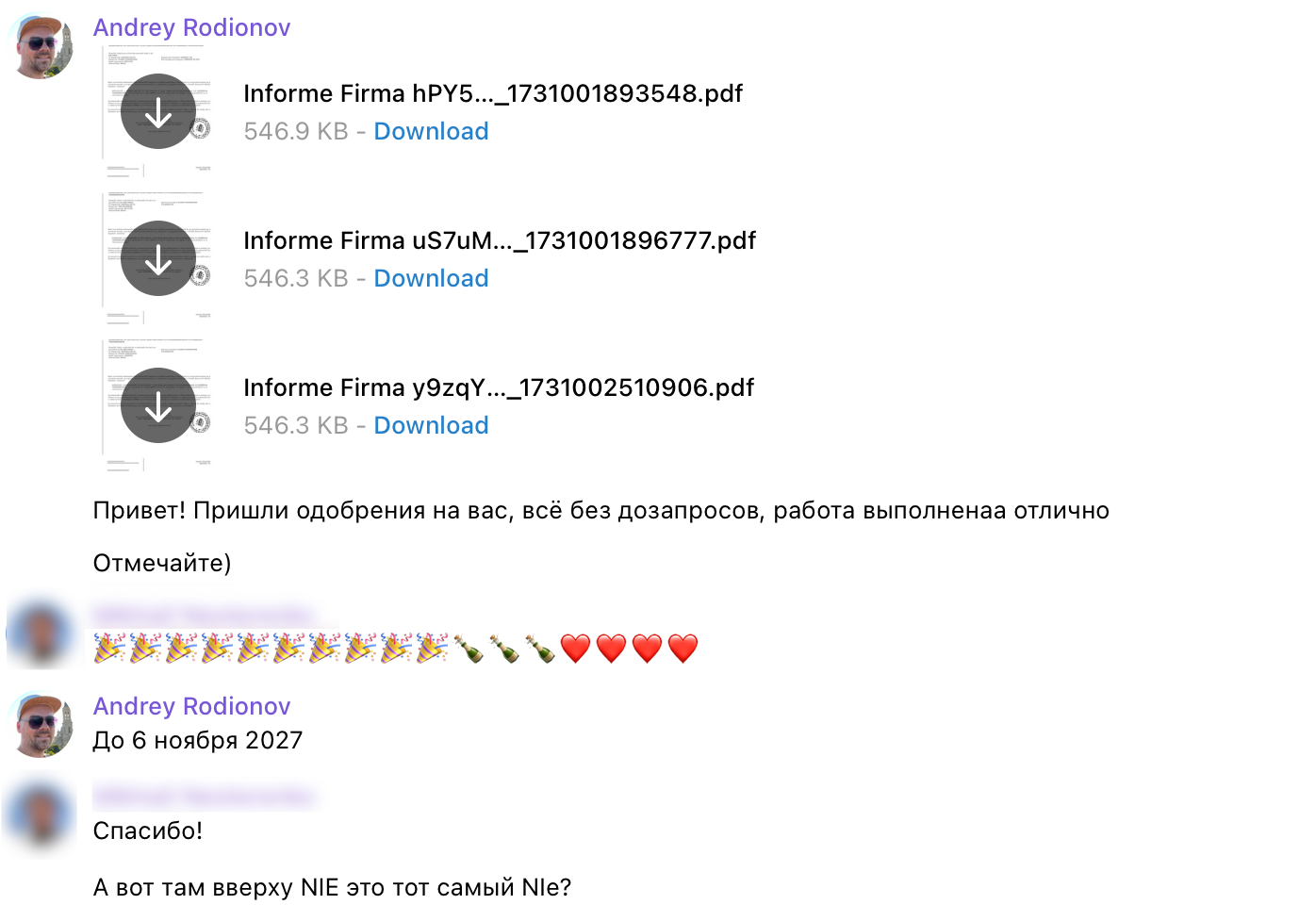
Working for a startup, paid in USDT — needed to document crypto income
Approved, registered as autónomo (self-employed) in Spain
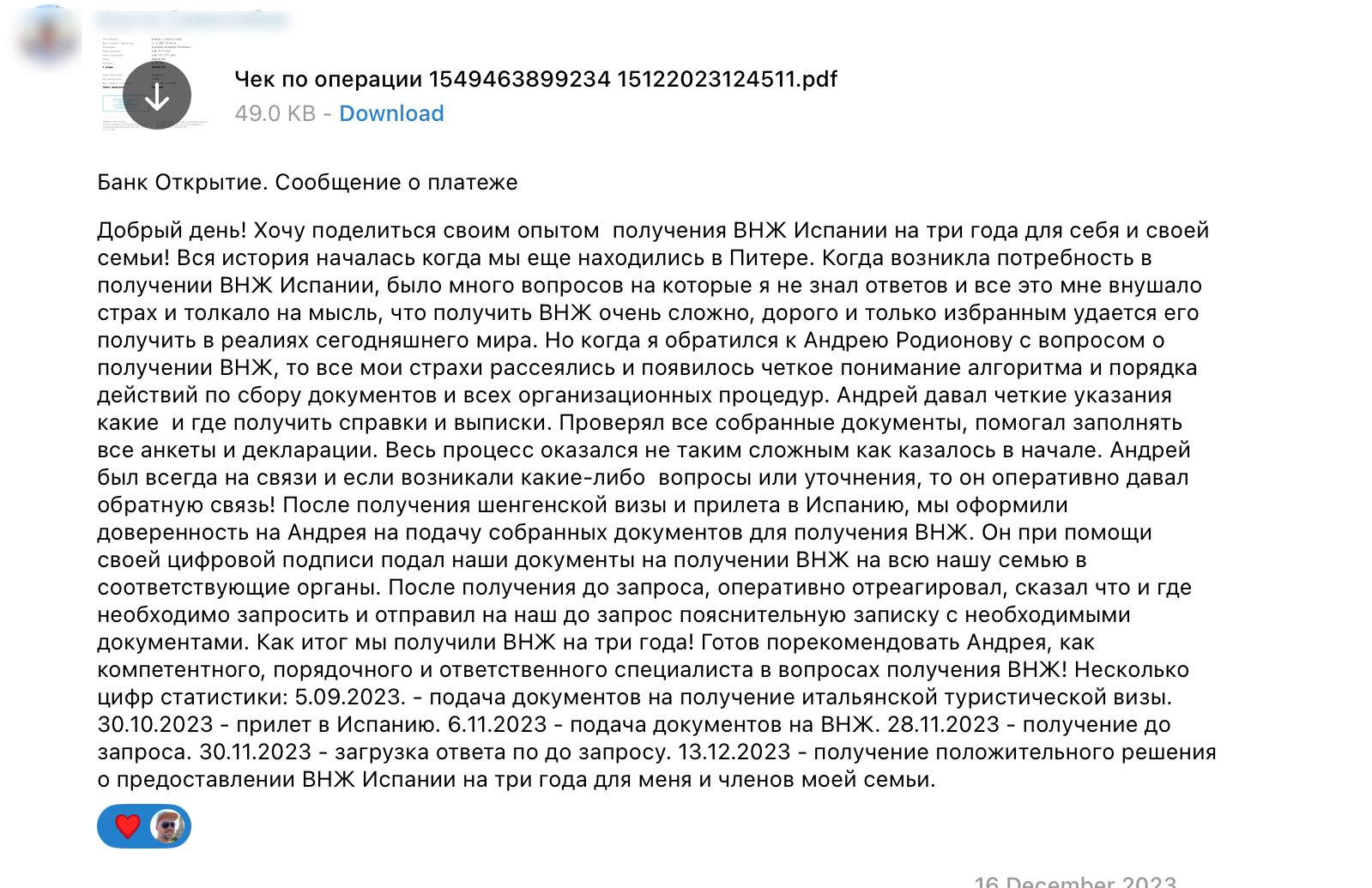
Internationally operating business, needed legal EU status for both founders
Relocated to Valencia, residence permits for both, business structure sorted
Working with international clients, irregular income stream
Residence permit in Barcelona, formal contracts with European studios
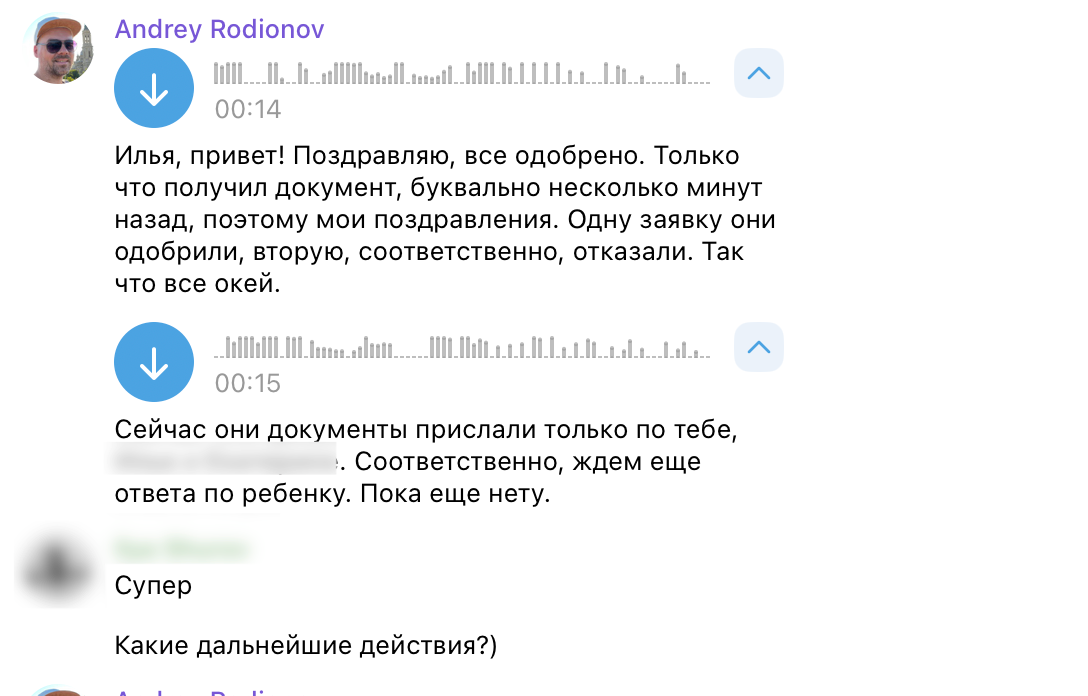
Working with European clients via Upwork, living out of a suitcase
Legal residency in Spain, signed a long-term apartment lease
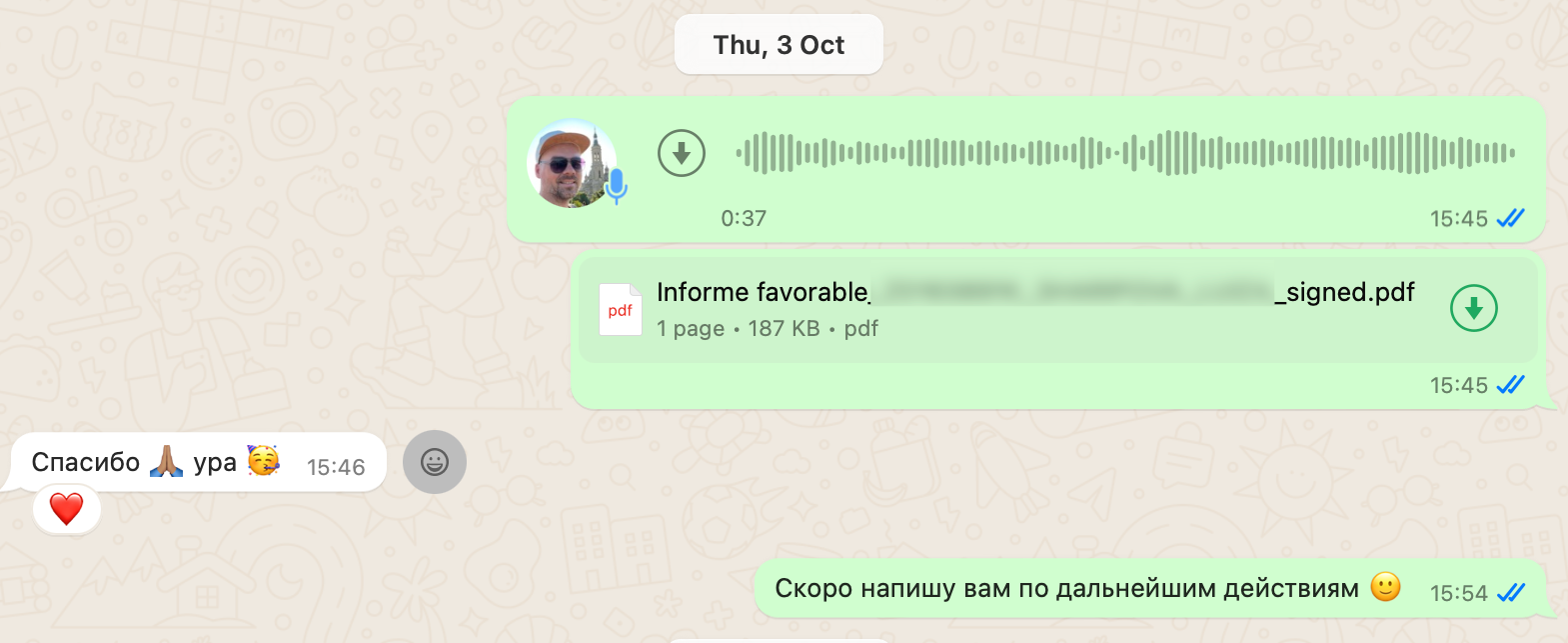
Seriously. Even if your situation feels "too complicated" or "not quite right" — in most cases it is perfectly workable. You just need the right approach and someone who has been through it before.
Discuss my caseNow that you have the full picture — from choosing your residency route to collecting your TIE card in Spain — you have a choice.
It is possible. But it requires time, close attention to detail, and the ability to navigate hidden pitfalls. I went through this process myself once — I know how it goes.
Hand everything document-related — reviews, submissions, UGE communications — to me. I manage every case personally — not delegated to a case manager.
I built this guide so you could see the process clearly, without myths or confusion. If my approach resonates with you — I'd be glad to walk you through every step from here to the TIE card in your hands.
Want to find out which route fits your situation and where to start?
Reach out — we'll review your situation in 15 minutes, free of charge.