
Spain Non-Lucrative Visa: The Honest Guide for US, UK & Canadian Applicants — Step by Step
Live in Spain on your pension, savings, or passive income — without working a day in the country. Income thresholds, FBI/ACRO/RCMP background checks, financial proof, and what happens after approval. Reading time: ~15 minutes.
Hello 👋
My name is Andrey. I'm based in Valencia, Spain, and since 2022 I've helped people from the US, UK, Canada, and other English-speaking countries secure Spanish residency. We've worked through 400+ Spanish residency cases: residency permits, tax registrations, and full relocations.
This guide is the concentrated version of that experience — not a copy of the official consulate checklist, but the real-world picture of what Spanish consulates actually look for, where applications stall, and what it all costs.
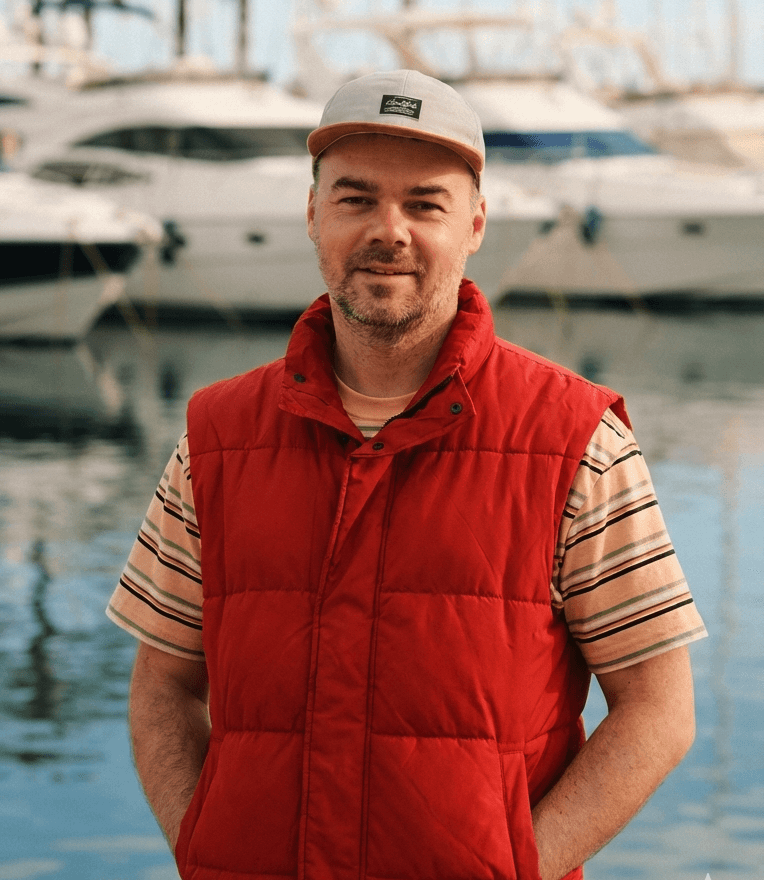
Andrey
Founder, EspañaGo — Valencia, Spain
Honest disclaimer up front. The Non-Lucrative Visa is not the right path for everyone. In several places below I'll say directly: "if this describes you, you probably want a different route." That is a feature, not a flaw. A wrong application wastes months and money.
Informational only — not legal or tax advice. Consulate requirements and their application in practice can change; verify your specific situation with a qualified adviser.
Guide contents
- Step 0. Is this visa actually right for you?
- Step 1. Eligibility checklist
- Step 2. What you gain — and what the fine print says
- Step 3. The money: how much, and how to present it
- Step 4. Documents — working list by country
- Step 5. Applying through your Spanish consulate
- Application timelines and patterns
- Step 6. Renewals and the path to permanent residency
- Step 7. Frequently asked questions
- The 3 mistakes that cause refusals
Is this visa actually right for you?
Before you order any documents, answer one question: do you plan to earn money while living in Spain?
The Residencia No Lucrativa (Non-Lucrative Visa, or NLV) was designed for people who do NOT work in Spain. You are permitted to reside in Spain full-time; you are not permitted to work there in any professional capacity.
This visa is built for:
- US retirees and early retirees (FIRE) living on Social Security, pension distributions, 401(k)/IRA withdrawals, brokerage dividends, or rental income;
- UK nationals who lost automatic EU residency after Brexit and want to return to a long-term life in Spain on pension or investment income;
- Canadian retirees on CPP, OAS, or passive investment income;
- anyone financially independent who does not need employment income in Spain;
- couples or families where one or both partners live entirely on savings or passive income.
The most common and costly misunderstanding
Remote work for a US, UK, or Canadian employer is NOT passive income. It is professional activity. Spanish consulates have consistently treated remote employment as incompatible with the NLV — applying for NLV while working remotely is a common and expensive mistake.
If you work remotely — even for a company based entirely outside Spain, even as a freelancer — you need the Spain Digital Nomad Visa (Visa para Nómadas Digitales), which was purpose-built for exactly that situation and carries a favorable tax regime. Tax treatment differs between routes — we are not tax advisers and coordinate with a qualified cross-border tax adviser where it matters. (Nothing here is tax advice.)
Applying for NLV with active remote-work income visible in your records is a fast route to refusal — and a refusal costs months of your time.
Not sure which route fits your situation? It's the most common question we receive. Write to us on WhatsApp — we'll give you a straight answer in 10–15 minutes, no obligation.
Eligibility checklist
Work through this list before spending money on documents. Check off each item that applies to you.
Checked all items? You meet the baseline requirements. Proceed to document preparation.
One or two items uncertain? That's a signal to get a case review before spending money on translations and apostilles.
Uncertain on even one item? Don't guess — a wrong application is expensive in both money and time. Write to us on WhatsApp and we'll review your situation before you spend a cent on documents.
What you gain — and what the fine print says
What you get
- Legal year-round residence in Spain — no 90/180-day Schengen clock ticking. For UK nationals especially, this is the direct replacement for what Brexit removed.
- Path to permanent residency (residencia de larga duración) after five years of continuous legal residence.
- Path to Spanish citizenship after ten years of continuous legal residence (most nationalities — verify applicable timeline with a Spanish immigration lawyer).
- Family inclusion — spouse/partner and dependent children can be included in the same application.
- No employer requirement — no job offer, no Spanish employer, no minimum salary from Spain.
- Schengen Area freedom of movement within your authorized residence period.
- Access to Spanish public education for children.
- Predictable, well-established process — the NLV has been running for many years.
What the fine print actually says
1. You cannot work in Spain — at all. Not for a local employer. Not remotely for a foreign employer. Not as a freelancer. The prohibition is absolute. This is not a technicality; it is the core condition of the visa.
2. Physical presence of 183 days/year is required for renewal. Under RD 1155/2024 (in force since May 20, 2025), NLV holders must demonstrate at least 183 days of actual physical presence in Spain per year to qualify for renewal.
3. Living 183+ days in Spain has tax implications. In Spain and in your home country. We are not tax advisers — where tax matters arise, we coordinate with a qualified cross-border tax adviser. Nothing here is tax advice.
4. You must prove finances at every renewal. The first TIE covers year one. Renewals at years 2–3 and 4–5 require fresh financial documentation each time.
Who the NLV is NOT right for
- Anyone who plans or needs to work in any form — including remote employment → Digital Nomad Visa
- Anyone without a documented, stable source of sufficient passive income or savings
- Anyone unwilling to spend 183+ days/year in Spain and comply with resulting obligations in both Spain and their home country
Read the fine print and still have questions? Spending 15 minutes now is better than months on the wrong visa. Write to us — we'll tell you honestly whether this is your route.
The money: how much, and how to present it
Spain's immigration law ties financial thresholds to the IPREM (Indicador Público de Renta de Efectos Múltiples — Public Income Indicator for Multiple Purposes). For 2026, IPREM stands at €600/month (€7,200/year). The NLV requires 400% of IPREM for the primary applicant.
Calculator: how much do you need to show?
Select the number of people in your application — primary applicant plus any family members (spouse/partner, children).
Savings balance
lump sum covering one year
Passive income
recurring monthly
EUR is the source of truth. USD/GBP/CAD equivalents are approximate and FX-dependent — do not rely on a fixed conversion rate. The Spanish Embassy in Washington, D.C., has published orientation figures in USD on its official website; always verify the current EUR figure with your consulate at time of application.
📎 Savings vs. income — a practical note. The regulation requires savings or monthly passive income. Many US applicants find it easier to demonstrate large savings (brokerage accounts, bank balances) rather than a precise recurring monthly income stream. Both are accepted; you are not required to have both. If you have both, present both — it strengthens your application.
The consulate looks at a financial picture, not just a balance
The most common financial rejection scenario: the right amount of money, but it all arrived recently, without history, or the source is unexplained. Three things consulates evaluate:
- Stability — funds were present before you decided to apply, not transferred in the past two weeks.
- History — bank statements covering 6–12 months are standard; some consulates request a full prior year plus a year-end balance certificate.
- Source — you need to be able to explain where the money comes from. Pension distributions (Social Security award letter, UK State Pension letter, CPP/OAS statement), dividend statements (1099-DIV for US), rental income contracts, or brokerage account reports all work. Unexplained large transfers raise questions.
Accepted evidence: US checking/savings/brokerage statements (Fidelity, Schwab, Vanguard, Interactive Brokers); UK current account and ISA statements; Canadian bank and RRSP/TFSA statements; Social Security award letters (US) or pension benefit statements (UK/CA); rental income supported by lease agreements and bank deposits; IRA/401(k) distribution statements; prior-year tax returns (Form 1040 / UK Self-Assessment / Canadian T1) as supporting context.
If an account is in a spouse's name, consulates may request a notarized letter authorizing the primary applicant's access to those funds.
Not sure whether your financial picture "reads" the way a consulate expects? This is where most applications stall. Show us your situation before you apply and we'll help you structure the documentation so the consulate has nothing to question.
Documents — working list by country
Most documents have a 90-day shelf life from issue date to application date. Collect everything around a fixed target submission date — not ad hoc. The full detail of each item is covered in consultations; here is the working list so you can see the full scope.
- Application forms: National Visa Application Form (Type D) + Form EX-01 + payment of consular fee (Form 790-052). Fee amounts vary by nationality — confirm the current amount with your consulate or BLS center at time of application.
- Valid passport: minimum validity of one year beyond the intended stay; minimum two blank pages; copies of all pages including blank pages. No "internal passport" is required for US/UK/CA applicants.
- Passport-size photos — per Schengen standard (typically 35×45 mm, white background — confirm exact spec with your BLS center or consulate).
- Financial documentation — as described in Step 3: bank statements, brokerage reports, pension award letters, rental income evidence, prior-year tax returns as supporting context.
- Criminal background check with apostille and sworn Spanish translation (traducción jurada):
— US: FBI Identity History Summary (federal — not state-level; apostille via US Dept of State, Office of Authentications). Order this first — allow 6–8 weeks minimum buffer.
— UK: ACRO Police Certificate (not a DBS check; FCDO apostille). Allow 8–10 weeks minimum buffer.
— Canada: RCMP Certified Criminal Record Check (fingerprint-based; apostille via Global Affairs Canada — Canada joined the Hague Apostille Convention January 11, 2024). Allow 6–8 weeks minimum buffer.
Valid for 90 days from issue; start this step immediately. - Private Spanish health insurance: issued by a company authorized to operate in Spain (e.g., Sanitas, AXA, Mapfre, Adeslas, DKV, ASSSA, Allianz Spain, Cigna Spain); full coverage; no copays, no deductibles, no waiting periods; minimum one-year term. Annual premium ranges vary significantly by age — request individual quotes before confirming your budget.
- Medical certificate in standard form confirming absence of public-health-risk conditions. If issued in the US/UK/Canada and translated into Spanish, a sworn translation (traducción jurada) or official authentication is required.
- Proof of accommodation in Spain: a long-term rental contract (minimum one year, signed before application) or, for property owners, a registry extract (nota simple) plus the deed of ownership.
- Proof of residence within the consulate's jurisdiction — confirm you are applying at the consulate with authority over your address.
Minor children: separate application form, passport, birth certificate (apostille + sworn Spanish translation), health insurance, photos. If applying with only one parent, notarized consent from the absent parent (apostille + sworn translation) is typically required. Financial requirement: +€7,200/year (€600/month) per child.
Adult dependent children: must demonstrate financial dependence on the primary applicant (enrollment in education, no independent income, evidence of financial support). Assessment is case-by-case — discuss your situation before applying.
Everything depends on coordinated timing
Most documents expire within 90 days of issue. The background check (FBI/ACRO/RCMP) has long lead times — which means if you collect it first but delay the appointment, it expires before you submit. Work backward from a firm target application date. Order the background check first; everything else follows in parallel.
Want a personalized document timeline for your family — with sequencing and dates for each item? That is the first thing we build in a consultation. Write to us →
Applying through your Spanish consulate
You apply at the Spanish consulate (or authorized BLS International visa center) with jurisdiction over your place of legal residence. Each country has a distinct process.
📋 This section reflects US, UK, and Canadian consulate practice as reported in 2025–2026. General procedure is outlined below; always confirm current requirements directly with your specific consulate or BLS center before submitting — requirements shift without notice.
Which consulate handles your application
US applicants submit through BLS International, the authorized visa application center for Spain in the US. Jurisdiction is based on your state of residence — New York, Los Angeles, Chicago, Houston, Miami, San Francisco, and other BLS centers each cover specific states. Do not submit to the wrong jurisdiction; applications will be returned. The full jurisdiction map is on the Spanish Ministry of Foreign Affairs website.
UK applicants: Spanish Consulate General in London handles most England and Wales applications; Spanish Consulate in Edinburgh covers Scotland.
Canadian applicants: Spanish Embassy in Ottawa, or consulates in Toronto, Montreal, or Vancouver depending on province of residence.
Part 1. The submission process
Step 5.1. Document preparation (allow 2–3 months minimum)
Given FBI/ACRO/RCMP background check timelines (see Step 4), plan a minimum of 2–3 months of lead time. Order the background check first — it has the longest pipeline and the shortest validity window once issued. Everything else (insurance, housing contract, financial documents) can be assembled in parallel. Your target: all documents valid and in-hand on the day you submit.
Step 5.2. Booking your appointment
US applicants book through the BLS International website for their jurisdiction. Appointment availability fluctuates — during peak periods (spring/fall), slots can book out several weeks in advance. Factor this into your timeline. Bring originals alongside your copies on the day; BLS centers sometimes ask to verify originals at submission.
UK applicants book directly with the Spanish Consulate General in London or the Edinburgh consulate. Appointment availability varies by season.
Canadian applicants book through the Spanish Embassy in Ottawa or the relevant regional consulate.
Step 5.3. Processing — decision timeline
Official decision period: up to 3 months (90 days from submission). In practice, US applicants submitting through BLS International centers have reported decisions ranging from approximately 5 weeks to 3 months in 2025–2026. If the consulate requests additional documents (requerimiento), you typically have 10 business days to respond — missing this window can result in the application being withdrawn.
Step 5.4. Receiving your visa
Upon approval, you receive a Type D national visa valid for 365 days (per RD 1155/2024). This allows multiple entries and covers you while you complete the residency card process in Spain. Important timing note: the TIE residency card can only be issued if you apply for it while the Type D visa is still valid with more than approximately 6 months remaining. Plan to enter Spain during the first half of your visa validity period. Upon refusal: the decision letter states the grounds — you may file an administrative appeal (recurso de alzada) or reapply with a corrected package. Most refusals are correctable, but they cost months, which is why preparation matters.
A refusal is almost always correctable — but it costs months
A refusal rarely means "you are ineligible." It most often means a documentation or presentation error. But fixing it and reapplying takes months — which is why getting the package right the first time matters far more than it might seem.
Preparing to submit? We work with applicants through US BLS centers, UK consulates, and Canadian consulates and know the current requirements for each. Write to us — we'll review your package before the appointment so you don't lose months to a preventable issue.
Part 2. After you arrive in Spain
Step 5.5. Enter Spain
Enter Spain within the validity period of your Type D visa. Keep confirmation of your entry date — you will need to demonstrate arrival timing for TIE processing.
Step 5.6. Empadronamiento (municipal registration — town-hall registration)
Empadronamiento is your official registration of residence at your local ayuntamiento (city hall). Required documents typically: passport and rental contract or property deed. Empadronamiento is required before applying for the TIE card in most Spanish cities. Exception — Barcelona and Madrid have historically not required it for TIE applications, but verify locally as requirements can shift. Empadronamiento is also required for accessing local services, health centers, and schools.
Step 5.7. Applying for the TIE (Tarjeta de Identidad de Extranjero — residency card)
Within 30 days of entering Spain: book an appointment at the Oficina de Extranjería or Comisaría de Policía with foreigners' services. Pay the government fee (Tasa Modelo 790, código 012 — verify current amount at the Spanish National Police official fee table). Submit: passport, Type D visa, approval letter from the consulate, proof of empadronamiento, passport photo. Give fingerprints at the appointment.
Step 5.8. Collecting the TIE card
The physical TIE card is typically ready 3–6 weeks after your appointment. Your first TIE is valid for one year.
What smooth applications look like
The figures below are orientation points based on 2025–2026 applicant reports and generalized patterns observed across multiple application files — not guarantees. Each consulate can change its pace at any time.
US BLS center decision timeline (2025–2026 reports)
planning buffer for FBI / ACRO / RCMP background check pipeline
Type D visa validity after approval — enter any time within this window
Generalized application patterns — what "clean" looks like to a consulate
These are generalized patterns observed across multiple application files — not individual client case details. They illustrate what financially coherent applications look like.
- Savings: US brokerage account (e.g., Fidelity/Schwab/Vanguard) with balance well above €28,800; 12-month statement showing consistent balance; year-end portfolio statement with broker letterhead.
- Income: quarterly dividend distributions and/or bond coupon payments; documented on annual brokerage income statement or 1099-DIV.
- Housing: one-year rental lease signed approximately 2–4 weeks before application.
- Insurance: Sanitas or AXA policy, full coverage, no waiting periods.
- Income: US Social Security award letters (both spouses) + defined-benefit pension benefit statement; combined monthly income comfortably exceeds €3,000/month for two applicants.
- Savings: joint brokerage account with 12-month history showing stable balance; no large unexplained deposits in the 90 days before application.
- Housing: property owned in Spain (registry extract + title deed) or long-term rental.
- Insurance: comprehensive family policy; both applicants listed by name.
- Income: UK State Pension award letter + private pension statement; rental income from UK property documented with tenancy agreement and bank statements showing rent deposits over 12 months.
- Savings: UK current account and ISA statements, 12-month history.
- Insurance: Sanitas or similar, confirmed before application submitted.
- Background check: ACRO Police Certificate + FCDO apostille + sworn Spanish translation completed and in-date.
- Savings: RRSP/TFSA/non-registered brokerage account statements (12 months); Canadian bank statements with consistent balance history.
- Income: portfolio distributions and/or CPP/OAS if applicable.
- Background check: RCMP Certified Criminal Record Check + Global Affairs Canada apostille (Canada joined the Hague Apostille Convention January 2024) + sworn Spanish translation.
- Housing: long-term rental lease executed before submission.
🔁 The common denominator in smooth applications: finances exceed the threshold with a visible margin, the money's history covers 6–12 months of consistent activity, the source of funds can be explained in one paragraph, no documents are expired, and health insurance confirms no waiting periods. When any one of those elements is unclear, requests for additional documentation follow — or refusals.
These patterns are an orientation, not a template. Similar packages in a different period or jurisdiction can receive a different outcome. Show us your situation — we'll compare it against current practice for your specific consulate.
Renewals and the path to permanent residency
Your first TIE card covers year one. The renewal schedule after that:
- 1st renewal — covers years 2–3 (two years)
- 2nd renewal — covers years 4–5 (two years)
- After 5 years — eligible for long-term permanent residency (residencia de larga duración)
- After 10 years — eligible for Spanish citizenship (most nationalities — verify applicable timeline with a Spanish immigration lawyer)
Renewal applications are submitted to the Oficina de Extranjería — in Spain, not at the consulate abroad. File no later than 60 days before your current card expires (filing within 90 days after expiry is technically possible but carries a risk of a late-filing penalty).
📎 The Non-Lucrative Visa has the strictest physical presence requirement of any Spanish residency permit. Under RD 1155/2024 (in force since May 20, 2025), NLV holders must demonstrate at least 183 days of actual physical presence in Spain per year in order to qualify for renewal. This is checked at renewal time. Living most of the year outside Spain means your NLV will not be renewed. Plan accordingly before applying.
At each renewal you must demonstrate: continued financial sufficiency (same IPREM thresholds apply), physical presence of at least 183 days/year, continued health insurance coverage, and no criminal convictions in Spain.
➕ Good news: after one year of NLV residence in Spain, you can modify (modificación de residencia) to a work-authorized permit — either employed (cuenta ajena) or self-employed (autónomo = self-employed) — if your circumstances change and you want to work. Requirements and timing rules apply; it is not automatic.
Overall timeline from start to TIE in hand
| Stage | Realistic duration |
|---|---|
| Order background check (FBI/ACRO/RCMP) — start immediately | 6–10 weeks planning buffer |
| Gather remaining documents (insurance, housing, financial) | 2–4 weeks (parallel with background check) |
| Book and attend consulate appointment | 1–4 weeks depending on availability |
| Consulate decision | 5 weeks – 3 months |
| Arrive in Spain, empadronamiento, TIE appointment | 2–4 weeks after arrival |
| Receive TIE card | 3–6 weeks after TIE appointment |
| Total from decision to TIE in hand | 4–6 months (realistic average) |
Frequently asked questions
The 3 mistakes that cause most refusals
Mistake 1: Applying for NLV while actively working remotely
The consulate reviews your professional profile. Active freelance or employment income visible in your financial records — on a visa that prohibits professional activity — is a fast route to refusal. If you work remotely, apply for the Digital Nomad Visa instead.
Mistake 2: Presenting the right number, not the right picture
Having €30,000 in an account is not sufficient if that €30,000 arrived three weeks before you applied. The consulate reads the financial history, not just the balance. Build the picture over 6+ months before you apply.
Mistake 3: Collecting documents out of sync
Most documents expire within 90 days. Ordering the background check in January, the medical certificate in February, and scheduling your appointment in May means the background check is expired before you submit. Sequence everything backward from a fixed target application date.
All three mistakes are made before the application is submitted — which is exactly when they are easiest to prevent.
What happens next
This guide gives you the map. A map and a route designed for your specific situation are different things.
If you are seriously considering the Non-Lucrative Visa — or still deciding between NLV and another route — here is what a structured consultation covers:
- Confirm whether NLV or another residency route (Digital Nomad, autónomo, other) is the right fit for your income and work situation;
- Review your financial documentation from the consulate's perspective;
- Build a personalized document timeline — background check first, everything else sequenced backward from your target submission date;
- Walk through the US/UK/CA-specific steps: which apostille authority handles your documents, which consulate has jurisdiction over your address.
Based in Valencia, Spain. We reply in English. Response within one business day.
This guide is informational only — it does not constitute legal, immigration, or tax advice. Spanish consulate requirements and their application in practice can change without notice. Verify your specific situation with a qualified immigration adviser and, for tax matters, with an adviser qualified in both Spanish and your home-country tax law.