
Spain's Cuenta Propia Visa — The Honest Guide to Self-Employed Residency for US, UK & Canadian Applicants
Modify from Digital Nomad, Non-Lucrative, or student status — or apply through your home-country consulate. Business plan, financials, documents, and real-world practice. Reading time: ~18 minutes.
Hello 👋
My name is Andrey. I'm based in Valencia, Spain, and since 2022 I've helped people from the US, UK, Canada, and other English-speaking countries secure Spanish residency. Self-employment — cuenta propia, literally "on one's own account," Spain's self-employed (autónomo = self-employed) residency route — is one of the cases we handle most often, backed by firsthand experience going through this exact process myself and daily work with immigration offices in Valencia, Barcelona, Madrid, Tarragona, and other regions.
This guide is the concentrated version of that practice. No rehashed official checklists — just what actually works in 2026, including the parts standard guides leave out. It follows the same logic as the application itself: first we work out your scenario, then walk through preparation stage by stage, from business plan to launching your activity.
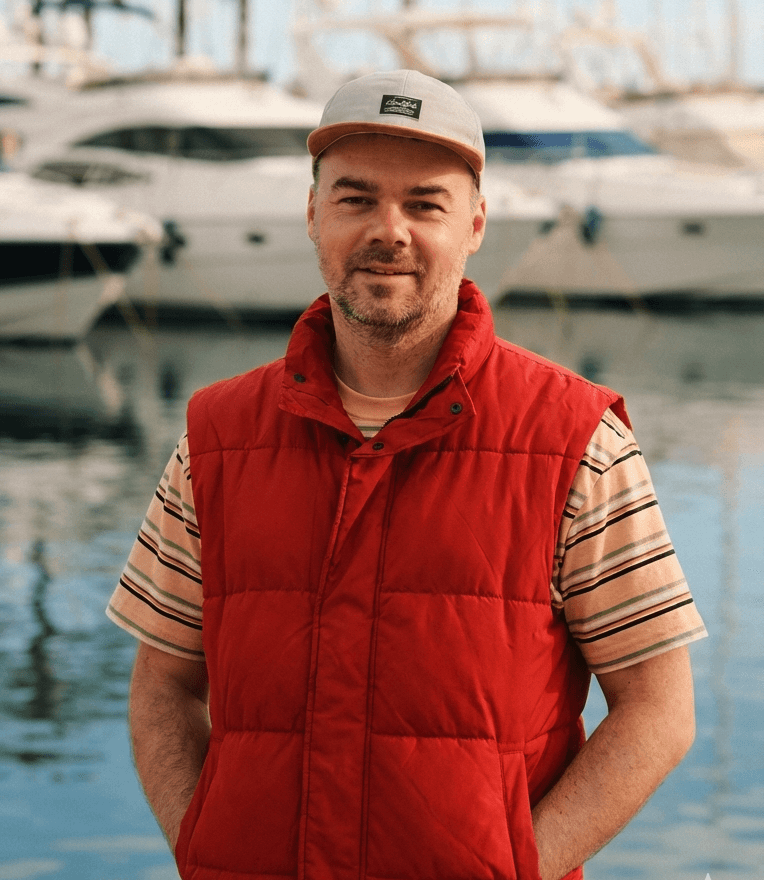
Andrey
Founder, EspañaGo — Valencia, Spain
Straight talk up front. Cuenta propia is a powerful but demanding permit. It is not a "universal way to move to Spain" — it's authorization for people who are genuinely ready to launch self-employed activity in Spain and prove it's viable. If your plan is "I just want to live in Spain and figure out the rest later," this isn't your route, and we'll say so plainly. This guide shows the upside, the fine print, and the refusal patterns, so you can decide with your eyes open.
Informational only — not legal or tax advice. Requirements, and how consulates and immigration offices apply them in practice, can change; verify your specific situation with a qualified adviser.
Guide contents
First we work out your scenario, then walk through preparation stage by stage — in the same order as the submission planner below.
- Step 0. Is cuenta propia actually your route?
- Submission planner: checklist and plan for your status
- Stage 1. Finances: how much money you need to show
- Stage 1. The business plan: the document that decides everything
- Stage 2. The ATA/UPTA certificate and your qualifications
- Stage 3. Documents: the full list
- Stage 4. Filing: consulate or in-Spain modification
- Stage 5. Family: reunification and rights
- Stage 6. After approval: autónomo and taxes
- What's next: renewal and long-term prospects
- 6 mistakes that most often cause a refusal
- Frequently asked questions
Is cuenta propia actually your route?
Cuenta propia (full name: residencia temporal y trabajo por cuenta propia — temporary self-employment residence and work permit) lets you live in Spain with the right to work for yourself: as a self-employed professional (autónomo = self-employed) or by running your own business. It fits you if you:
- plan to work in Spain as a self-employed professional, invoicing clients under your own name;
- are opening a small business or private practice in Spain;
- can document your qualifications and experience;
- can show a viable project and enough funds to launch it and live on.
And the reverse — cuenta propia is not your route if you want to work for a Spanish employer as an employee (that's a different procedure, cuenta ajena = employed work), if you don't plan to run a genuine economic activity and the permit is just "for a nicer passport," or if you have neither relevant education nor experience in your chosen field — an unsupported business plan won't pass review.
The most common scenario we see: remote workers whose Digital Nomad Visa is running out, who've picked up a Spanish client, or who are bumping against the 20%-income-from-Spain cap on that visa — modifying to cuenta propia after one year of residence gets you a straight 4-year permit. The one closed door is a student stay for language courses obtained or renewed after May 20, 2025 (Royal Decree 1155/2024): modification is unavailable from that status — more in the FAQ.
Pick your own scenario, timeline, and status nuances in the submission planner right below this section.
Not sure this is your visa? On a call, we'll figure out in under an hour whether cuenta propia fits your situation, or whether there's a faster route. Write to us on WhatsApp →
Submission planner: checklist and plan for your status
Choose your status and the number of people applying, and get a stage-by-stage preparation plan sequenced so no certificate expires before you file. The plan starts with a short checklist of what you should have in hand, and every stage links to the matching section of the guide below.
Permit length
Financial cushion
+ 3 months of business operating costs
Preparation horizon
from business-plan kickoff to filing
Your stage-by-stage plan
Something not adding up in the checklist, or want a plan with real dates for your case? Most sticking points get solved with better documentation, not a refusal. On a call, we'll go through your situation item by item and build a preparation timeline with the right sequencing for collections and translations. Write to us →
Financing cuenta propia: how much money you need to show
The foundation of your application is the financial picture, and you need to start building it from day one of preparation. This is where a lot of applicants trip up — the law doesn't set one hard number, and online sources give conflicting answers. Here's what immigration offices and self-employed associations actually look at. The financial side is assessed against three separate "sufficiency" tests.
1 Sufficiency of projected business income
The reference point is at least 100% of Spain's minimum wage (SMI) per applicant, plus 50% per accompanying family member — roughly €1,221/month gross as of 2026 (SMI is revised annually, so confirm the current figure). This is about net profit, not revenue. In the first few months profit can run lower — that's normal — but showing €300/month on paper won't work. A realistic starting point is €900–1,000 net from month one.
2 Sufficiency of business investment
Even if your business is "a laptop and Zoom," you need to show concrete spend: equipment, software, licenses, furniture, registration fees. If you've already bought something, attach the invoices. If it's planned, attach quotes.
3 Sufficiency of living funds
The legal floor is roughly one year of IPREM (Public Income Indicator for Multiple Purposes — around €7,200; confirm the current figure). In practice, files read stronger showing at least €10,000 per applicant plus roughly €3,500 per accompanying family member, on top of three months of business operating costs.
How the money is documented matters as much as the balance
A bank certificate showing a large balance doesn't speak for itself — immigration offices and ATA/UPTA reviewers look at three things. Stability: funds were in place before you decided to apply, not wired in during the past two weeks. History: 6–12 months of consistent bank or brokerage statements is the standard ask; some files benefit from a full prior year plus a year-end balance certificate. Source: you should be able to explain, in one paragraph, where the money came from — US brokerage/bank statements, UK current account/ISA statements, Canadian bank/RRSP/TFSA statements, or prior-year tax returns as supporting context. Funds held in mainstream banks connected to the SWIFT network are the norm for US/UK/CA applicants and rarely raise questions on their own; the more common issue is how the certificate is worded, not the currency or the country.
A separate detail: the exact wording of the certificate. If your bank's standard certificate shows a 6–12 month average balance rather than the current balance, that cuts both ways — a high average strengthens the file, a low one can undercut it. Check in advance which version your bank will issue, and request "current balance" instead of an average if you have a choice. Order the certificate itself close to your target filing date — it's typically valid for about a month (see Stage 3).
Not sure your financial picture holds up? We'll show you, with numbers, what the financial part of your specific case should look like — which account to show what on, how to explain the source of funds, how to structure the investment. Write to us →
The business plan for cuenta propia: the document most applications fail on
If cuenta propia is a building, the business plan is its foundation. We start here: it's the most labor-intensive piece, and your client letters and ATA/UPTA certificate both depend on it. Based on our review of the files we handle, here are the top seven points where cases fall apart:
1. A weak financial model
No calculation of startup costs, 6–12 months of operating expenses, or revenue projections. "We'll figure it out later" doesn't work.
2. Unproven qualifications
No diplomas, certificates, or portfolio. The stated activity doesn't match real experience.
3. No market analysis or demand evidence
The reviewer needs to see that the project fits the regional economy.
4. Superficial process descriptions
The plan reads like a pitch deck for an idea, not a working document.
5. No economic benefit to Spain
No shown interaction with local business, tax contribution, or hiring prospects.
6. Document formatting errors
Uncertified translations, mismatched personal details, wrong format.
7. No social proof
A website, portfolio, social media, project screenshots — missing these weakens even a strong case.
What the business plan needs to include
- A full description of the activity (services, products, pricing).
- Market and competitor analysis for the region you're targeting.
- A financial model: investment, expenses, revenue, break-even point, 3-year projection.
- Any business spend already incurred, documented from any country (invoices/receipts).
- Tax projections (IRPF income tax + Social Security contributions; IVA/VAT if applicable).
- 5+ letters of intent from prospective clients (cartas de intención — letters of intent, or pre-contracts).
- A description of your workspace — coworking or office rental.
- Everything else depends on the type of business you're presenting.
Letters of intent: the section that trips up even strong cases
- 5+ letters is the ideal. 3–4 is workable, but not preferred.
- 1–2 letters from a Spanish limited company (SL) are strongly recommended. Even if your target audience is individuals, immigration offices expect to see at least one "serious" corporate client.
- 2–4 letters from local Spanish autónomos strengthen the file further.
- Services and pricing in the letters must match the business plan exactly. That's why letters are requested after the service list is finalized, not before — start conversations now, collect the final letters closer to submission.
- Ideally, the combined value of the letters should exceed your plan's projected monthly income.
Workspace rental
Many applicants assume IT freelancing needs no rental at all. Formally, that's true — you can work from home. In practice, skipping it raises the risk of a refusal or a follow-up request. If you rent an apartment and the lease doesn't prohibit working from it, that's fine to use as-is. If it does prohibit it, get a written addendum from the landlord explicitly permitting it, and attach that to your file.
The common fix: a coworking membership. A half-day desk without an unlimited plan is often enough. Attach either a pre-contract or a lease plus the first month's invoice.
Not sure your business plan will hold up? On a call we go through your specific project: what to strengthen, which letters are realistically obtainable, what financial model fits your niche — checked against the same criteria ATA/UPTA will use to review it. Write to us →
The ATA/UPTA certificate and your qualification documents
Once your business plan is ready, send it for a viability review. ATA (Asociación de Trabajadores Autónomos) and UPTA (Unión de Profesionales y Trabajadores Autónomos) are Spanish self-employed trade associations, roughly comparable to industry unions — they issue a report "validating" your business plan for immigration purposes. A handful of other recognized associations can issue an equivalent report too; confirm the current list with your adviser since accepted bodies can change.
Although this report is formally optional, in practice it's expected. A project-viability certificate from ATA/UPTA (or another recognized association) is the standard. Without it, your file will still be reviewed, but your odds drop noticeably. This is the slowest item in the stage — allow 2–4 weeks — which is why it comes right after the business plan is finalized.
In parallel: your qualification documents
- Diploma — with an apostille and a sworn Spanish translation (traducción jurada) if it's relevant to your field. Plus any course certificates.
- Résumé — written directly in Spanish.
- Portfolio — website, case studies, links to your work. If your diploma isn't a close match for your field, a strong portfolio and certificates are what compensate for it.
- Workspace rental — lock in a coworking pre-contract, or a lease plus the first month's invoice.
This is also when you start your criminal-record certificate. Collecting it with an apostille has a country-dependent lead time — plan for it now, because it also has a short shelf life once issued (about 90 days):
- US: FBI Identity History Summary (a federal record, not a state-level check) — apostille through the US Department of State, Office of Authentications. Allow roughly 6–8 weeks.
- UK: ACRO Police Certificate (not a standard DBS check) — apostille through the FCDO. Allow roughly 8–10 weeks.
- Canada: RCMP Certified Criminal Record Check (fingerprint-based) — apostille through Global Affairs Canada (Canada joined the Hague Apostille Convention on January 11, 2024). Allow roughly 6–8 weeks.
If you're applying with family, adult family members need their own criminal-record certificate too, and marriage/birth certificates need an apostille and sworn Spanish translation — prepare those in parallel.
Documents for cuenta propia: the full list, and the short-lived certificates
One rule matters most: anything not already in Spanish must be translated by a sworn translator from the official register (traductor jurado). The list below looks long, but broken into blocks it's manageable. It's oriented toward modifying an existing Spanish permit — the far more common path than a first-time consulate application.
Why some documents are only collected at the very end: shelf life varies. A bank certificate lasts about a month; a medical certificate and a criminal-record certificate last about three months. Collect things out of sequence and one certificate will be expired by the time you have your appointment, forcing a redo. So short-lived documents — the bank certificate, medical certificate (for consulate applications), and final letters of intent — are prepared 2–4 weeks before filing, not earlier. The full sequencing for your specific case is in the submission planner.
- Form EX-07 — the official application form.
- Passport — valid, full copy.
- Criminal-record certificate — with apostille and sworn translation (US: FBI Identity History Summary; UK: ACRO Police Certificate; Canada: RCMP Certified Criminal Record Check).
- Medical certificate — for applications filed through a consulate.
- TIE — for anyone modifying from within Spain.
- Proof of financial means — bank/brokerage statements.
- Business plan — the key document (Stage 1).
- Project-viability certificate from ATA/UPTA — formally optional, expected in practice (Stage 2).
- Education documents — diploma, course certificates, all with apostille and sworn translation if relevant to your field.
- Résumé — written directly in Spanish.
- Professional portfolio — website, case studies, project links.
- Letters of intent from clients — at least 5, per the rules in Stage 1.
- Workspace rental agreement — coworking or office.
- Equipment invoices — if you've already purchased anything for the business.
- Proof of fee payment — roughly €10 and €80 (modification) or roughly €200 (first-time residence application).
- Marriage or registered-partnership certificate — with apostille and translation.
- Criminal-record certificate.
- Proof of housing — the vivienda adecuada document confirming the housing suits the family.
- Sufficient finances — reference point: 150% IPREM for the primary applicant + 50% IPREM per family member.
- Birth certificate — with apostille and translation.
- Criminal-record certificate — for children over 18 (on request).
- Vivienda adecuada — confirmation that the housing is sufficient for the whole family.
- Sufficient finances — +50% IPREM per child.
Adult children cannot be attached to a family application — they must file separately.
- Registration with Social Security and the tax agency.
- Tax-debt clearance certificate.
- Employment-history report (vida laboral).
- IRPF tax return filings.
Want a ready-made personal checklist for your family — with the order and dates for getting each document? That's the first thing we build on a call. Write to us →
Filing for cuenta propia: through a consulate, or modification within Spain
This is the fork that shapes the whole process. Both routes are governed by Ley Orgánica 4/2000 and the current regulation, Real Decreto 1155/2024, but they differ in procedure and requirements.
📋 This section reflects general US, UK, and Canadian consulate practice as reported in 2025–2026. Always confirm current requirements directly with your specific consulate or BLS International center before filing — requirements and fee-payment methods shift without notice.
Through a consulate (first-time application)
When it fits: you're outside Spain, don't hold a current Spanish residence permit, and are planning a move from scratch.
- File your documents at the Spanish consulate with jurisdiction over your place of residence — in the US, through the authorized BLS International visa center for your state; in the UK, the Spanish Consulate General in London or the Edinburgh consulate; in Canada, the Spanish Embassy in Ottawa or the relevant regional consulate.
- Processing — officially up to 3 months.
- On approval — a national Type D visa.
- Enter Spain → apply for your TIE → register with Social Security.
Permit length
1 year
Modification within Spain
When it's available: you're legally in Spain, and your current permit is one of the following:
- Digital Nomad Visa — the most common scenario today. After 1 year of residence, you move to cuenta propia for a straight 4 years.
- Startup Visa (entrepreneur) — same, after 1 year.
- HQP (Highly Qualified Professional).
- Non-Lucrative Visa — after 1 year of residence; the permit takes effect once you complete mandatory Social Security registration. You get cuenta propia for 1 year.
- Student permit (university/further education) — after finishing your studies (language-course stays don't qualify).
- Arraigo — the rooted-status permit for special circumstances, from any Arraigo category.
Permit length
up to 4 years
From DN, Startup, or HQP: straight 4 years. From Non-Lucrative or a student permit: 1 year.
Which to choose
If you're already in Spain on a qualifying status, modification is almost always the better deal. Reasons:
- The permit is granted for a straight 4 years (filing from DN/Startup/HQP), not 1 year.
- You don't need to leave the country.
- Regional Extranjería offices are often more lenient than a consulate application.
If you're outside Spain, the consulate route is your path, and it's a workable one too — covered below. You may have already mapped your own scenario in the submission planner at the top of this guide.
If you're modifying within Spain
This part is comparatively simple: Form EX-07 with the full document package is filed through Mercurio (the online portal) or in person at the Extranjería office for your province. Fees run roughly €10 and €80. From there, watch the case status: once it moves to "en trámite" (in process) — usually within 1–3 weeks — you can file for family members, covered in Stage 5.
Applying through your Spanish consulate
You apply at the Spanish consulate (or authorized BLS International visa center) with jurisdiction over your place of legal residence. Each country's process differs in the details.
Which consulate handles your application
US applicants submit through BLS International, the authorized visa application center for Spain in the US. Jurisdiction follows your state of residence — different BLS centers cover different states. Submitting to the wrong jurisdiction gets your application returned; the full jurisdiction map is on the Spanish Ministry of Foreign Affairs website.
UK applicants: the Spanish Consulate General in London handles most England and Wales applications; the Spanish Consulate in Edinburgh covers Scotland.
Canadian applicants: the Spanish Embassy in Ottawa, or the consulates in Toronto, Montreal, or Vancouver depending on your province.
Appointment booking — start early
Appointment availability varies widely by country, city, and season. Some jurisdictions can book out several weeks or months in advance during peak periods. Start hunting for a slot alongside your business plan, not after it's done.
Your NIE — apply for it early
The NIE (Spanish foreigner tax ID number) is required for your residence application. It's typically requested through the same consulate — don't leave it for later.
Submission — in person only
The applicant must submit the file in person. Verify the current procedure and required documents directly on your consulate or BLS International center's official website before booking.
Fees and payment
The residence-permit fee (Form 790-052) is typically paid by money order or online payment, depending on the consulate; BLS International's own service fee can usually be paid by card. Payment methods and amounts vary by country and even by individual consulate/BLS center — confirm the current accepted method before your appointment, and note that some consulates require exact payment with no change given.
Review and follow-up requests
The official review period is up to 3 months. After filing, the consulate may request additional documents (requerimiento) — you typically have a limited window (around 10 business days) to respond, and delivery in person is often required. On approval you receive a national Type D visa, enter Spain, and apply for your TIE (Stage 6).
And the key point: a business plan for a consulate application needs to be prepared even more rigorously than for an in-Spain modification. Regional Extranjería offices in Spain sometimes show flexibility — consulates almost never do. Every documentation requirement should be treated as the maximum standard: sworn translation of anything not in Spanish, apostilles on diplomas and the criminal-record certificate, a correctly worded bank certificate, an ATA/UPTA certificate — don't skip a single item.
Not sure which path to take, or preparing to file through a US, UK, or Canadian consulate? On a call we'll map it to your specific situation: status, timeline, goals, region. It's often the case that waiting two months to file for a 4-year permit beats rushing for a 1-year one. We'll build a preparation timeline and tell you which clinics, sworn translators, and notaries we work with ourselves. Write to us →
What about family members?
If you get a cuenta propia permit, you can bring close family members through family reunification (reagrupación familiar). This generally covers a spouse or registered partner, minor children, children with disabilities, and — in some cases — parents.
Financial requirements
- for the primary applicant — 150% IPREM;
- for each additional family member — +50% IPREM.
Exact amounts depend on the current IPREM figure at the time of filing.
Housing requirements
You need to confirm suitable housing: a rental contract or property, sufficient floor space, and compliance with sanitary standards — the vivienda adecuada (adequate-housing) document. It takes time to obtain — start the process 2–3 months before filing your family's documents, i.e. at the very beginning of preparation (Stage 1 of the planner).
How family members file
The primary applicant files in Spain → once approved, family members get visas at the consulate → they enter Spain → they get their TIE. This path also applies for a first-time consulate application: you relocate first, then reunite the family.
On modification from Digital Nomad status, if a spouse/children were already attached to the nomad's original application, their documents can usually be filed almost immediately after — without leaving Spain. Important: you can't file at exactly the same time as the primary applicant — the primary application must first move to "en trámite" (in process) status, usually 1–3 weeks after filing (you'll get a notification), and only then do family members file. We track this timing for our clients.
Rights of family members
- A spouse or partner gains the right to work in Spain.
- Children get access to the education system.
- The family gets access to the healthcare system once registered with Social Security.
Launching your activity: autónomo, TIE, and taxes
Approval is in hand — now the actual life of a Spanish self-employed professional begins. First steps: register as autónomo with Social Security (if you modified from Non-Lucrative status, the permit takes effect right after this registration) and get or renew your TIE card. If you went through a consulate, you enter first on your Type D visa, then apply for the TIE. From there, taxes: once you're registered as autónomo and living in Spain more than 183 days a year, you become a Spanish tax resident and are subject to Spanish tax law. Below are the key taxes and obligations.
1 Income tax — IRPF
The main tax for an autónomo is IRPF (Impuesto sobre la Renta de las Personas Físicas). It's progressive; the general scale runs roughly from 19% to 47% depending on the autonomous region and income level.
You pay it either through quarterly advance payments (modelo 130) or via withholding if you invoice Spanish companies (retenciones). An annual return (Declaración de la Renta) is filed at year-end.
Important: taxes are paid based on your region of registration, and rates differ by region — worth factoring into where you choose to live. Valencia is among the higher-tax regions.
2 Social Security contributions
Every autónomo pays monthly contributions to Social Security. These contributions grant access to public healthcare, pension accrual, and benefits (for example, temporary-disability pay). That means you get health coverage as part of this status — one of its clear advantages.
3 VAT — IVA
If your activity is subject to VAT, you must issue invoices with IVA (typically 21%, with reduced rates of 10% and 4% for certain sectors), file quarterly returns (modelo 303), and submit an annual summary (modelo 390). Some activities are VAT-exempt — for example, certain educational and medical services.
4 Deductions and reduced regimes
An autónomo can deduct business expenses (rent, equipment, phone/internet, transport, and more), depreciate equipment, and in some cases use simplified VAT regimes. Reduced Social Security contribution rates ("tarifa plana") may apply for new autónomos who meet the conditions.
Tax rules and rates shift year to year and are not the same as your US, UK, or Canadian tax obligations, which may still apply. We are not tax advisers — coordinate with an adviser qualified in both Spanish and your home-country tax law. Nothing here is tax advice.
Renewal and long-term prospects
Getting the permit is half the job. Here's what comes next.
First-time consulate application
- Initial permit — 1 year.
- First renewal — straight to 4 years.
- For renewal: active business activity, financial standing, and 183 days of presence in Spain during the first year.
Modification from DN / Startup / HQP
- Permit granted for a straight 4 years — the main reason modification beats a consulate application.
- Renewal — another 4 years, with no new business plan required.
- For renewal: an active business, financial standing, and 183 days a year of presence in Spain throughout all 4 years.
Renewal doesn't require a new business plan, but you do need to demonstrate active business activity (taxes, filings, Social Security contributions) and financial standing. Without real activity, the permit won't be renewed — that's not a technicality, it's the whole point of this residence type.
Long-term prospects
- After 5 years of legal residence → eligible for long-term permanent residency (residencia de larga duración).
- After 10 years → eligible for Spanish citizenship (most nationalities — verify the applicable timeline with a Spanish immigration lawyer, since some countries qualify for a shorter path).
6 mistakes that most often cause a refusal
Mistake 1: A "template" business plan with no market analysis
→ Fix: ground the project in the actual economy of a specific region — with numbers, named competitors, and real pricing.
Mistake 2: Qualifications that don't match the stated activity
→ Fix: if your diploma isn't a close field match, compensate with certificates, experience, a portfolio, and case studies. Your résumé must be in Spanish.
Mistake 3: Presenting a recent transfer instead of a documented financial history
→ Fix: build 6–12 months of visible, consistent balance history in a mainstream, SWIFT-connected bank or brokerage account well before you apply, and be ready to explain the source of funds in one paragraph.
Mistake 4: Letters of intent only from individuals
→ Fix: at least 1–2 letters from a Spanish SL or a Spanish autónomo, with services and pricing matching the business plan exactly.
Mistake 5: Skipping the UGE notification
If you're a digital nomad or startup founder, it's strongly recommended to notify the UGE (Unidad de Grandes Empresas — the Spanish unit that manages Digital Nomad and Startup registrations) that you're changing your residence status. You'll need a letter along the lines of "I'm no longer under this status because I'm changing my residence to cuenta propia." Book a call and we'll walk you through it.
Mistake 6: Filing all family members at the same time as the primary applicant (on in-Spain modification)
You can't file simultaneously: the primary applicant's case has to reach "in process" status first, and only then can family members file. That usually happens 1–3 weeks after the primary application is filed, and you'll get a notification when it does.
All of these mistakes share one thing in common: they cost months of your life, and they're made before filing — exactly when they're easiest to prevent.
Frequently asked questions
What happens next
If you've read this whole guide and still feel "I get it in general, but my situation is more complicated" — that's the right instinct. Cuenta propia is a permit where the general rules have to be adapted to the specific person: your field, your region, your current status, your family, your financial history.
Which is why the next step is a personalized consultation. On it, we:
- confirm whether cuenta propia fits your situation, or whether there's a shorter or better-value route;
- review your current status and decide between modification and a consulate application;
- build your financial picture: where and how much money to show, how to document its source;
- work through the concept for your business plan for your specific niche — what will realistically pass ATA/UPTA review and what won't;
- build a document preparation timeline with the right sequencing for collections and translations;
- if you're filing through a consulate, give you a working playbook: how to grab an appointment, where to get certificates, which translators to use;
- answer your specific questions — no templates.
Based in Valencia, Spain, since 2022. Daily work with immigration offices in Valencia, Barcelona, Madrid, and other regions. We reply in English.
This guide is informational only and does not constitute legal, immigration, or tax advice. Spain's immigration regulations are updated regularly (the latest major reform, Real Decreto 1155/2024, took effect May 20, 2025), and the practice of individual Extranjería offices and consulates changes even more often. Always verify current requirements and strategy for your specific case with a qualified adviser.