
Spain Startup Visa — 3-Year Residency for Founders and Their Families
The entrepreneur residency permit (residencia para emprendedores): the right to live, work, and run a business — for the founder and every family member. ENISA's criteria, the document package by family composition, and an honest look at which projects don't make it through. Reading time: ~18 minutes.
Hello 👋
My name is Andrey. I moved to Spain myself through the Startup Visa — I wrote my own ENISA business plan from scratch, and Spain approved it. Since then, my team and I have helped founders from the US, UK, Canada, and other English-speaking countries secure this residency for their companies, as part of 400+ Spanish residency cases we've worked through overall.
This guide is the concentrated version of that experience — not a rewrite of the official checklists, but what ENISA and UGE-CE actually look for in practice, what the official guidance leaves out, and where self-filed applications tend to fail.
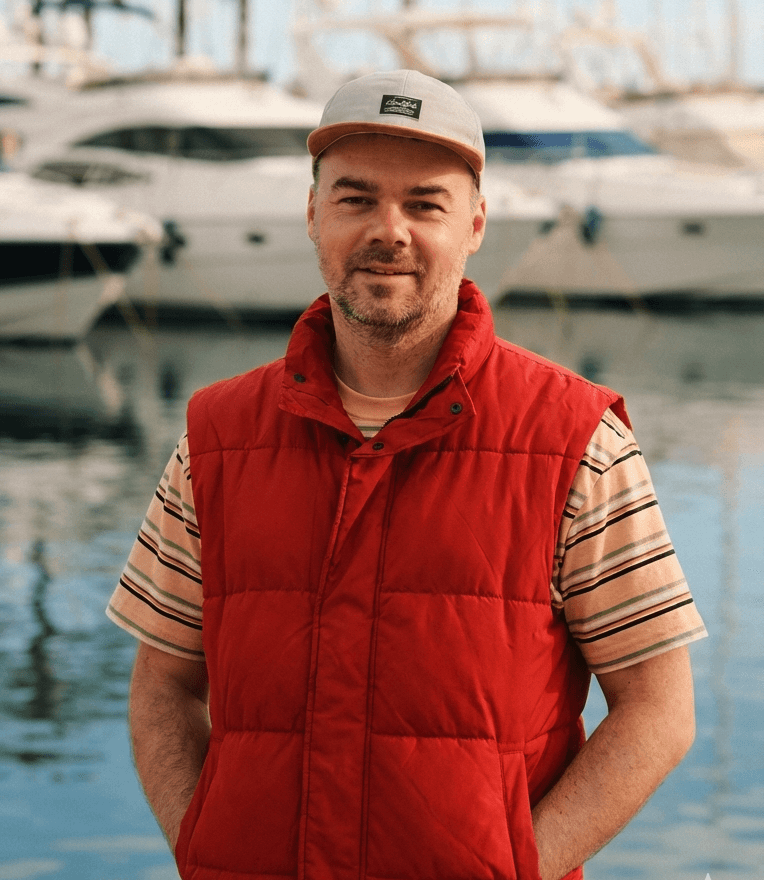
Andrey
Founder, EspañaGo — Valencia, Spain. Moved to Spain himself on the Startup Visa
Honest disclaimer up front. The Startup Visa is the most generous residency type in terms of rights, but a business plan thrown together in an afternoon doesn't pass here. You need to show that you understand your own project — and that Spain has a reason to be interested in it. We don't take on "paper" projects built purely to obtain residency: if the real goal is simply relocating rather than building a business, the Digital Nomad Visa is a more honest, more reliable route — remote income is enough, with no ENISA report and no business plan.
Informational only — not legal or tax advice. ENISA and UGE-CE practice, and the SMI-indexed thresholds below, change over time; verify your specific situation with a qualified adviser.
Guide contents
What the Spain Startup Visa is and who it's for
The Spain Startup Visa (officially autorización de residencia para emprendedores — entrepreneur residency authorization, under Ley 14/2013, Spain's Law on Support for Entrepreneurs) grants residency for 3 years at once to the founder of a business project and every member of their family. The key difference from other Spanish residency routes: every adult family member gets the right to work — from the first day after the card is issued.
This route solves two real problems:
- living in Spain legally and building a business — not on a tourist stay, and not through informal arrangements;
- launching a project Spain has an economic interest in — not "just another café," but something with a genuine innovative component.
Who it's for: founders planning to start, grow, or manage a business in Spain. The project must be innovative and/or of special economic interest to the country, confirmed by a favorable report from ENISA — covered in detail in its own section below.
A genuine advantage: there is no formal minimum investment amount or job-creation quota.
Residency length
for every family member at once, plus a further 2-year renewal if the project is running
Right to work
every adult family member, from day one
Processing
average, from filing to decision
Where you file from. Only from inside Spain: the application is filed electronically with UGE-CE while you are legally present in the country. US, UK, and Canadian citizens can enter Spain visa-free under the 90-day Schengen short-stay rule — you can file the application any time up to the last day that stay is still valid. Many applicants combine filing with a trip to Spain they'd take anyway: file, then you can wait for the decision from anywhere.
Not sure this is the right route for you? If your income is from remote work, look at the Digital Nomad Visa; if you're living on passive income or a pension, see the Non-Lucrative Visa. Fastest way to find out — message us on WhatsApp and we'll map the right route in about 15 minutes.
Documents for the Startup Visa: the package for your family
Choose who's applying — the section below updates to show what your family gains, how much money to show, and the full document list for each applicant.
What this gets your family
3-year residency at once for everyone — no annual renewals, no short "probationary" cards.
Right to work for every adult — not just the founder: employment, their own business, freelancing.
Spouse/partner is a full resident — works wherever they want, not an add-on to the main visa.
Children access schools and nurseries — including free public ones, plus healthcare.
Free movement in Schengen — no 90/180-day clock, travel across Europe without visas.
Banking and finance — accounts, cards, a mortgage over time; full financial integration in Spain.
Path to permanent residency and citizenship — the 3 years count toward it: permanent residency after 5 years, citizenship after 10 (subject to standard exceptions).
No requirement to start earning instantly — Spanish tax and social-security obligations begin once the business actually starts generating income. Not tax advice — verify with a qualified adviser.
How much money to show
Funds needed for: a family of 3
available at the time of filing · EUR is the source of truth; USD/GBP/CAD equivalents are approximate and FX-dependent
These amounts are tied to Spain's SMI (minimum wage) and are indexed annually — we confirm the current figures before filing. A statement from any bank is accepted, in any currency with a sufficient euro equivalent.
Document package by who's applying
- ENISA-format business plan — the central document of the application, covered in the next section.
- Screenshot confirming the business plan was uploaded to ENISA — added to the UGE-CE file after submission.
- Bank statement — for the amount matching your family composition (see the calculator above). Any bank is accepted; there is no restriction by country of origin for US, UK, or Canadian accounts.
- Criminal background check with apostille and sworn Spanish translation (traducción jurada):
— US: FBI Identity History Summary (federal-level, not state; apostille via the US Department of State, Office of Authentications). FBI fee ≈ $18; federal apostille ≈ $20; plus fingerprinting and, if used, a sworn-translation fee. Order first — allow 6–8 weeks buffer.
— UK: ACRO Police Certificate (not a DBS check), roughly £55–£95 depending on turnaround, plus FCDO apostille (£40 government fee, more with a service provider). Allow 8–10 weeks buffer.
— Canada: RCMP Certified Criminal Record Check (fingerprint-based, C$25 federal fee plus fingerprinting/conversion costs), apostilled through Global Affairs Canada — Canada joined the Hague Apostille Convention on January 11, 2024. Allow 6–8 weeks buffer.
Valid for 90 days from issue; start this immediately. Not required if you have already been legally resident in Spain for more than six months at the time of filing. - Self-declaration of no criminal record — a signed statement, completed at home.
- Commitment to comply with Social Security obligations — a declaration that you will register once the business generates income.
- Form MI-T — print, complete, sign by hand, scan.
- Private health insurance — a commercial policy authorized to operate in Spain, no copays, no waiting periods (typically Sanitas or DKV), roughly €600–800/year depending on age — request individual quotes.
- Paid application fee — roughly €73.26 (confirm the current amount and form/tasa code before paying). The receipt is generated by whoever holds the digital signature certificate; payment is made through a Spanish bank.
- Proof of legal presence in Spain — arriving on a direct flight: passport scan showing the entry stamp plus your boarding pass; arriving via another EU country: a Declaración de Entrada (entry declaration) filed with the police within 72 hours.
- Scan of every passport page — as a single PDF.
- Power of attorney for filing — submission is electronic and requires a certificado digital (digital signature certificate); without a Spanish NIE of your own, a representative files on your behalf.
- Marriage or registered-partnership certificate — a scan is sufficient, but a sworn (jurado) Spanish translation is required.
- Declaration that the marriage/partnership is still valid at the time of filing — signed at home.
- Criminal background check — apostille and sworn translation, as for the primary applicant.
- Self-declaration of no criminal record — signed at home.
- Form MI-F — print, complete, sign by hand, scan.
- Private health insurance — commercial, no copays, roughly €600–800/year.
- Paid application fee — roughly €73.26.
- Proof of legal presence in Spain — entry stamp plus boarding pass, or a Declaración de Entrada.
- Scan of every passport page — as a single PDF.
- Power of attorney for filing — to the representative holding the digital signature certificate.
- Birth certificate — scan plus sworn Spanish translation.
- Consent from the other parent — if the child is not from the current relationship: consent for residence in Spain and for obtaining the residency card.
- Form MI-F — completed and signed by a parent.
- Private health insurance — commercial, no copays, roughly €400–600/year.
- Paid application fee — roughly €73.26.
- Proof of legal presence in Spain — entry stamp plus boarding pass, or a Declaración de Entrada.
- Scan of every passport page — as a single PDF.
A criminal background check is not required for children under 18.
- Prior-year tax return (Form 1040 / UK Self-Assessment / Canadian T1) — useful later when opening a Spanish bank account and proving income.
- Source-of-funds documentation — in case a Spanish bank asks about the origin of the money.
- Marriage-validity certificate — useful if one parent travels with the children while the other stays behind.
💶 Estimated preparation cost for your family: Add sworn translations (roughly €30–50 per document) and, if you don't hold a Spanish NIE yourself, €100–500 for filing through a representative with a digital signature certificate. Background-check costs vary meaningfully by country — see the figures above. All-in DIY budget: roughly €1,000–2,000 per family, not including travel or accommodation.
Feels like a lot of paperwork? In practice, collecting it takes about a week — the business plan is what takes the time. We can manage this entire block — a personalized list with dates, receipts, and translations — on one condition: the project is real. Write to us →
What your project needs to look like: innovation and ENISA's criteria
The decision on your residency depends 90% on the project. There is one legal test: the project must be innovative and/or of special economic interest to Spain. ENISA (Empresa Nacional de Innovación), a Spanish state-owned company, evaluates this and prepares a mandatory report for every application.
That sounds abstract, so here's what ENISA and UGE-CE actually look at in practice — three blocks:
1 Founder profile and involvement
Who you are in the project and why you're the one who will make it work: experience, role, skills, team. Resume, portfolio, prior projects. If the stated activity doesn't match your actual background, that's a red flag.
2 ENISA-format business plan
Product or service description, market, competitors, financial model: investment (laid out clearly — you don't need to hold it all in your bank account), funding sources, hiring plan, revenue forecast. It must follow ENISA's official structure — a free-form narrative doesn't work. A well-built business plan typically takes about a month to prepare.
3 Value to the Spanish economy
Innovation, investment potential, future tax contribution, future jobs, engagement with the local market. There's no formal threshold, but the reviewer needs to see why Spain benefits from your project.
What a project needs — checklist
- Traction — work already done: a prototype, first customers, letters of interest, research. Traction is exactly what investors use to decide whether to fund a project, and what reviewers use to decide whether to grant residency.
- Technological or business-model novelty — you don't need to invent artificial intelligence, but "yet another marketplace with a photographer directory" won't pass.
- A well-established sector — in practice, projects around blockchain, crypto, mental health, and habit-tracking apps have seen weaker approval outcomes. Clear, understandable products in growing sectors of the economy tend to fare better.
- A realistic financial model — numbers that add up: costs, revenue, investment, break-even point.
- A team with relevant skills — multiple co-founders can apply: once the first one is approved, the rest typically move noticeably faster.
What an approved project looks like — an anonymized example
The following is an anonymized, illustrative example of what a strong ENISA-format application contains — representative of an approved project's structure, not a specific client's guaranteed outcome. Picture a LegalTech SaaS platform doing AI-driven automation for accounts-receivable collection, built on a privacy-first approach; here is how its application was organized — use it as a structural reference:
1. General information
Project name, a 100-character summary of the activity, the CNAE activity code, and the city of launch.
2. Innovation — five fields, ~3,000 characters each
A pending patent (data-processing technology with no access to personal data), proprietary technology and stack, and how the process, product, and business model differ from competitors. Every claim is backed by a number: "+46% collection efficiency," "automation cuts manual work by up to 89%," "€210,000 invested in R&D."
3. Scalability and market
Demand analysis (a roughly $5B market growing 9–11% per year), barriers to entry in Spain and how the project addresses them, 9 named competitors with market shares and a specific point of differentiation from each, and a 12/24/36-month roadmap.
4. Stage and traction — the most persuasive section
12+ active customers, roughly €13,600 in monthly recurring revenue, 17 live product features, and a break-even point projected at 22 months. This is exactly what separates a real project from a "paper" one.
5. Financial plan
Roughly €700,000 in planned investment, broken down by line item and year (channel-by-channel marketing spend, EBITDA support until profitability), funding sources by percentage (own capital / company / funding rounds), a 5-year customer and revenue forecast, a hiring plan reaching 41 employees, and roughly €1.14M in projected tax contribution to Spain — the reviewer needs to see the benefit to the country.
6. Team
Three co-founders — CEO, CTO, CLO — with 12–21 years of industry experience each, LinkedIn references, and an explanation for each of why they strengthen the project (their own patents, prior projects delivered in the niche).
7. Suppliers, partners, customers
Key vendors with a note on replaceability, shareholders, and a table of actual customers with payment amounts for the last period.
Supporting attachments
The written form is only half of it. Every claim needs supporting files uploaded with the business plan:
- Patent or pending registration — if there is proprietary technology.
- Financial model in spreadsheet form — 5 years: customers, revenue, expenses, EBITDA, break-even.
- Proof of revenue — invoices and payment records from customers.
- Product screenshots — the interface, a demo, the website, the app.
- Customer letters — of interest or pre-contracts (12 confirmed responses from the Spanish market in the example above).
- Proof of development spend — invoices and contractor agreements.
- Founder resumes and profiles — CV, LinkedIn, degrees, certifications.
- Marketing results — campaign statistics and funnel data, if any marketing has already run.
- Partnership agreements — arrangements with local companies strengthen the barriers-to-entry section.
We can take this entire block off your hands: packaging the business plan to ENISA's format, the financial model, letters, attachments, and filing. Writing the business plan is a bit like a language exam — knowing the grading criteria is what matters most. I wrote my own, and it was approved, as have dozens since. One condition: the project needs genuine, ongoing activity — we don't take on "paper" applications. Send us your project for a review →
Why "paper" projects don't get approved
A meaningful share of self-filed startup-visa applications end in refusal — and nearly all of the refused ones share the same pattern: a project that exists only on paper, a polished idea with zero completed work. ENISA reviewers spot this quickly. We only take on projects with genuine, ongoing activity — we do not accept "paper" applications built purely to obtain residency. Here's what typically trips up those applications:
1. No traction — just an idea
The business plan is all future tense: there will be customers, there will be a product, there will be revenue. What's already been done? If there's no answer, it's a refusal. You need a prototype, customer conversations, letters of interest — some artifact of real work.
2. The founder doesn't fit the project
A marketer files a biotech project they've never worked a day in. The applicant's experience and role need to logically explain why this particular founder can make the project succeed.
3. A financial model that's just for show
Investment is mentioned but never broken down: on what, when, from which sources. Expenses don't reconcile with revenue. A model with no hiring plan, no tax line, and no marketing spend is a sign of a "paper" project.
4. A generic idea with no novelty
A café, a salon, "yet another aggregator." For that kind of business, cuenta propia (self-employed residency) is the right route — the Startup Visa track requires innovation or special economic interest.
5. Sectors that see weaker outcomes
Blockchain, crypto, mental health, and habit-tracking apps have shown weaker approval outcomes in our experience. A clear, understandable product in a growing sector has meaningfully better odds.
6. Not built on ENISA's official format
A free-form business plan, off ENISA's structure, with formatting errors and missing Spanish translations of key sections, can get an application rejected on purely technical grounds.
An important nuance: a working MVP is not required. There's a middle ground between "a bare idea" and "a finished product" — demonstrated work on the project. That's exactly what good preparation packages: looking at the project the way a reviewer will, and showing it isn't still at the fantasy stage.
And keep in mind: even a carefully built project can occasionally be refused — it has happened to cases we've worked on. The difference is that a well-assembled file can almost always be salvaged: an appeal, or a switch to a different residency route, without losing time.
If the business is a pretext and the real goal is just relocating, don't force the startup track. We don't take on "paper" projects built purely for residency: the odds are low, and after 3 years you'll face a renewal question you have nothing real to answer. For the goal of "live in Spain legally on remote income," the Digital Nomad Visa is a better fit — no ENISA report, no business plan, the same 3-year residency. Here's our service for it, and here's the free guide.
How to file for the Spain Startup Visa: UGE-CE, ENISA, and timelines
From the start of preparation to filing usually takes 4–5 weeks, most of it spent on the business plan. Filing itself is electronic and happens in three steps:
Documents — to UGE-CE
The full package is uploaded to UGE-CE (Unidad de Grandes Empresas y Colectivos Estratégicos — the unit that issues this residency). Filing is done by whoever holds the digital signature certificate (certificado digital) — the applicant directly, if they already have a Spanish NIE, or a representative acting under power of attorney.
Business plan — to ENISA
A separate upload of the business plan to ENISA, the agency that evaluates the project. Its report is mandatory and, in practice, typically takes about 1.5 months to prepare.
ENISA confirmation — back to UGE-CE
Confirmation that the business plan is under review is added to the UGE-CE file. From there it's a waiting period, with responses to any additional-document requests if they arrive.
By law
but don't count on it — in practice positive administrative silence doesn't function on this track
In practice
average from filing to decision, plus any additional-document requests and card issuance
Family
even a year later; faster once the primary applicant is approved
Filing can be combined with a trip to Spain you'd take anyway — enter visa-free under the 90-day Schengen rule, file, and you can wait for the decision from anywhere. We can handle the entire technical side — the digital signature certificate, fee receipts, uploads to UGE-CE and ENISA, and tracking any additional-document requests — as long as the project is real. Plan a filing trip →
Renewing the Startup Visa: 2 more years, or 4 years on cuenta propia
The initial residency runs 3 years. During that time you'll need to incorporate a Spanish limited company (SL) and get the business genuinely running as soon as possible, so the residency isn't withdrawn — periodic checks do happen. By the end of the 3 years, you need a strategy. There are two paths:
Renew the startup residency
- Renewal for 2 years.
- You need to show the project is alive: activity, taxes, contributions.
- Best if the startup is genuinely growing and remains your main venture.
Modify to cuenta propia
- Available after just 1 year of residence — and grants residency for 4 years at once.
- No need to re-prove innovation — genuine activity as a self-employed autónomo (self-employed worker) is enough.
- The next renewal is again 4 years, with no new business plan required.
- The entire period counts toward permanent residency.
Why we more often recommend Path 2. The startup track is a great "front door" — 3 years for everyone at once, right to work for the whole family. But renewing the startup residency requires showing a live, innovative project — and life often changes over 3 years: the project pivots into a regular service, Spanish clients show up, you end up working for yourself. Cuenta propia fits that shift well: the requirements are simpler (genuine self-employed activity instead of proven innovation), and the term is 4 years instead of 2.
It pays to plan this move ahead of time: setting up the activity correctly in year one, registering as autónomo, and building a filing history. A full breakdown of the transition is in our cuenta propia guide.
The longer horizon
- After 5 years of legal residence → permanent residency (residencia de larga duración).
- After 10 years → potentially Spanish citizenship (subject to standard exceptions — verify the applicable timeline with a Spanish immigration lawyer).
The "startup → cuenta propia" move is better planned ahead of time — setting up the activity correctly in year one, registering as autónomo, and building a filing history. We support clients through the whole route — from the first filing to permanent residency — provided the project is real. Plan your route →
Frequently asked questions about the Spain Startup Visa
What happens next
If, after this guide, you're left thinking "I have an idea, but I'm not sure it will pass" — that's a normal reaction, and it's something we can check in a single conversation. In a consultation, we:
- assess your idea against the same criteria ENISA uses — we'll say honestly if the project is weak and what to strengthen;
- if you don't have an idea yet — suggest directions based on your background and what tends to actually get approved;
- build a document plan for your family — with dates and sequencing;
- map out the financial picture: which account, what amount, how to present it;
- design a 3-year strategy — including the move to cuenta propia and the path to permanent residency.
Based in Valencia, Spain. I went through this route myself and have since helped founders from the US, UK, Canada, and elsewhere secure the Startup Visa — always working only with projects that have real, ongoing activity. If your actual goal is relocating rather than building a business, we'll say so honestly in the first consultation and point you to the Digital Nomad Visa instead.
This guide is informational only — it does not constitute legal, immigration, or tax advice. Requirements under Ley 14/2013, ENISA and UGE-CE practice, and the SMI-indexed thresholds above are updated periodically; verify current figures and the right strategy for your case in a consultation.